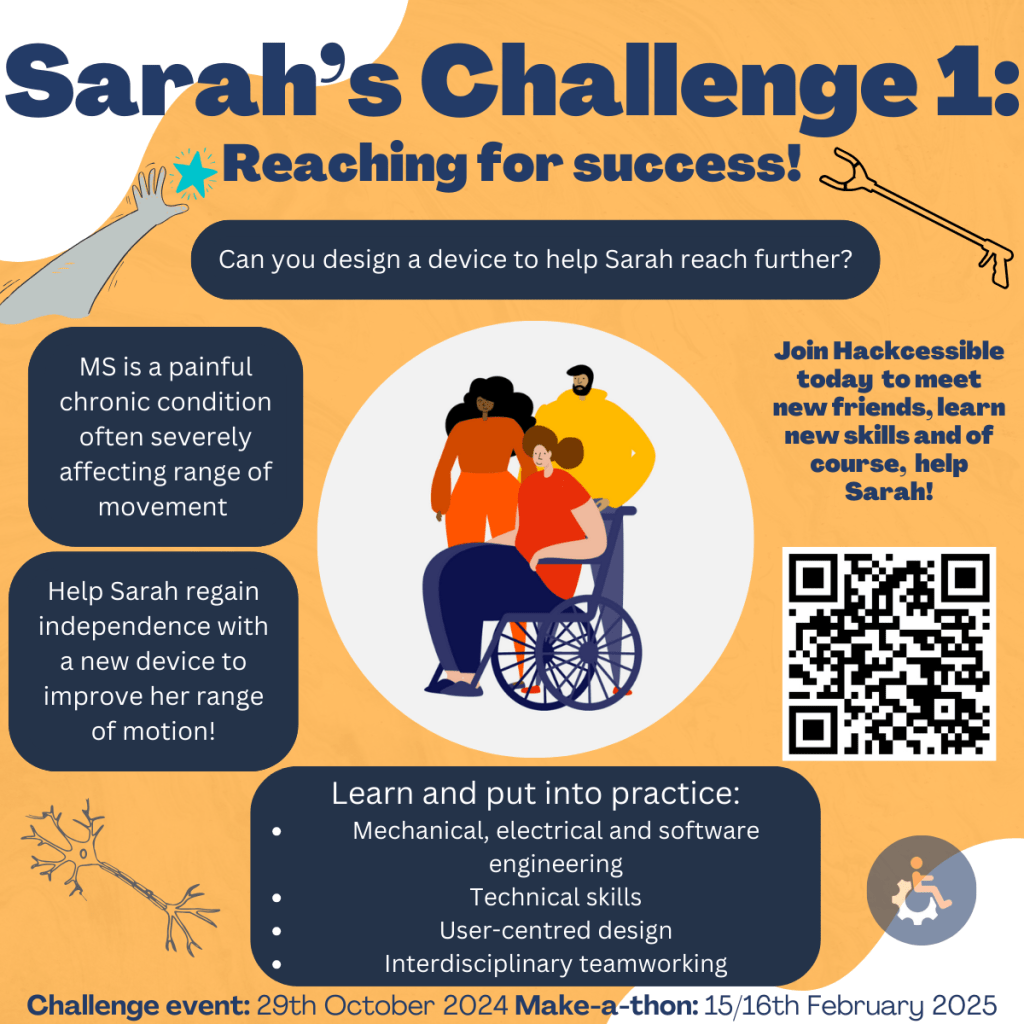
Sarah’s First Challenge
Sarah has multiple sclerosis
(commonly referred to as MS)
which is a chronic, disabling
condition commonly affecting
young people.
It affects the nervous system and
makes basic tasks involving
reaching up and down difficult
such as:
- brushing or washing hair
- applying creams
- nail cutting
- cleaning self
- toilet aids
Your task is to design a device
that helps Sarah manage her day
to day activities without pain.
Sarah has multiple sclerosis
(commonly referred to as MS) which
is a chronic, disabling condition
commonly affecting young people.
Many young MS sufferers use
walkers rather than wheelchairs to
maintain independence but, walkers
are designed for elderly users.
Can you redesign a walker to help it
better suit young adults like Sarah?
This could include:
- Holding devices (e.g. for phones)
- Safety features (e.g. lights)
- Storage
- Remote control aspects
- Easier to adjust handles
- Aesthetic changes
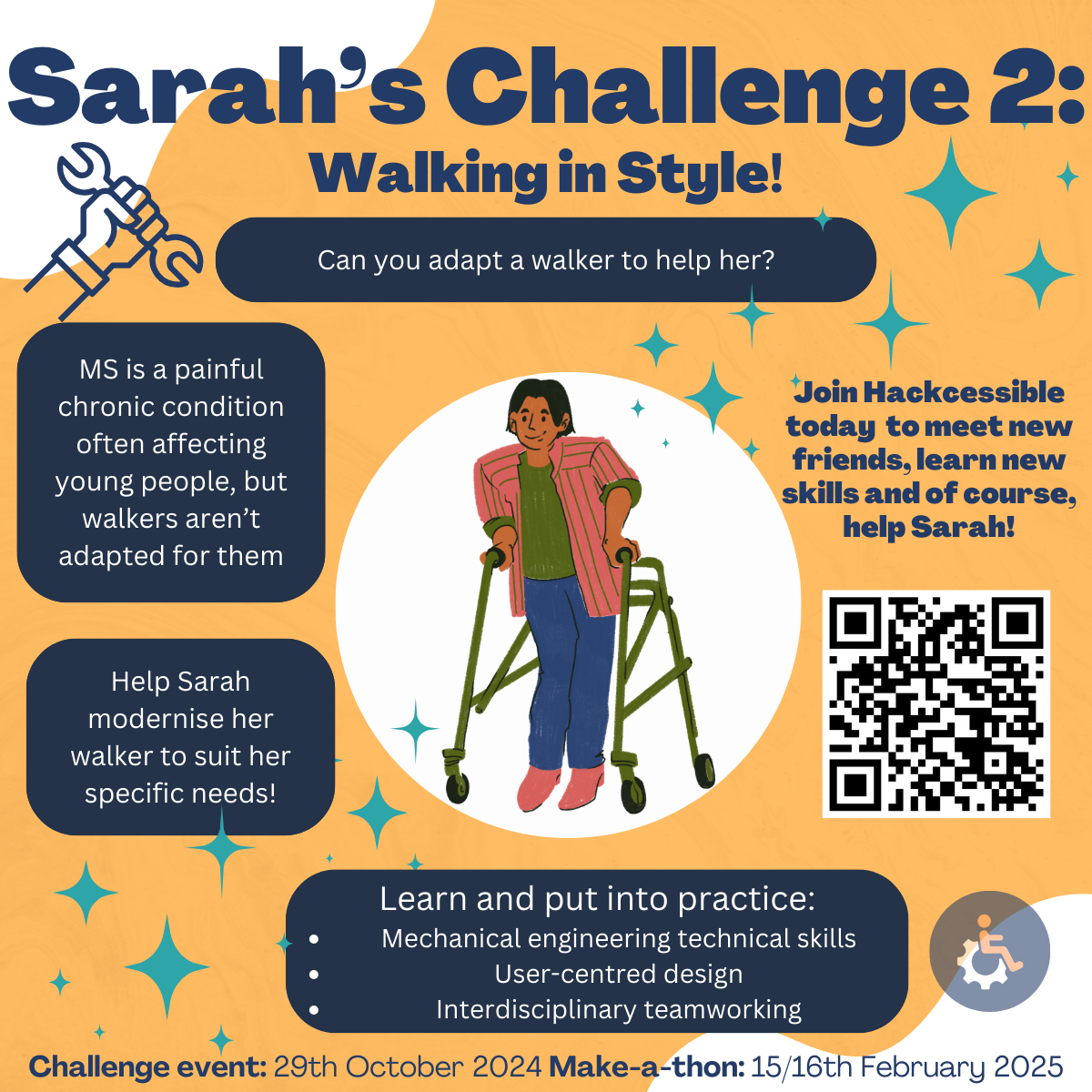
Sarah’s Second Challenge
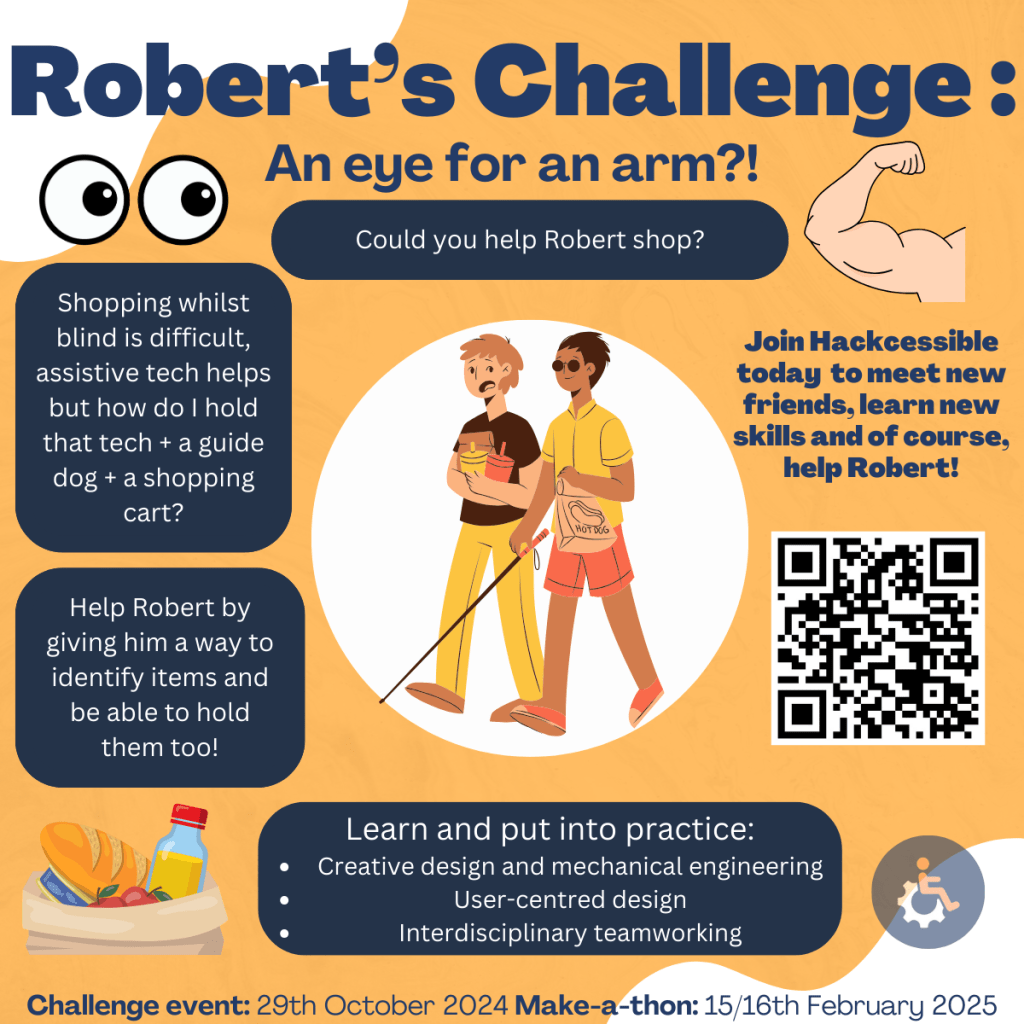
Robert’s Challenge
Shopping whilst visually impaired is
made easier for Robert with apps
on his phone providing auditory
feedback. But he can’t hold his
phone up, his basket, grab items
AND hold his guide dog. He is also
concerned someone might steal
his phone as he is holding it out
very obviously indicating he is
visually impaired.
Essentially shouting “I’m visually impaired come and steal my phone!”
Your task is to design a way for
Robert to hold his phone and have
full use of his hands- all without
making him a potential victim of
theft!
Frank loves cooking, but being blind
makes it difficult for him to plate
his dishes. Plastic dishes can have
separators but they are
unappealing. especially when Frank
is cooking for guests!
Your task is to design a way for
Frank to plate his meals easily whilst
maintaining aesthetics.
We want his food to look as
amazing as it tastes!
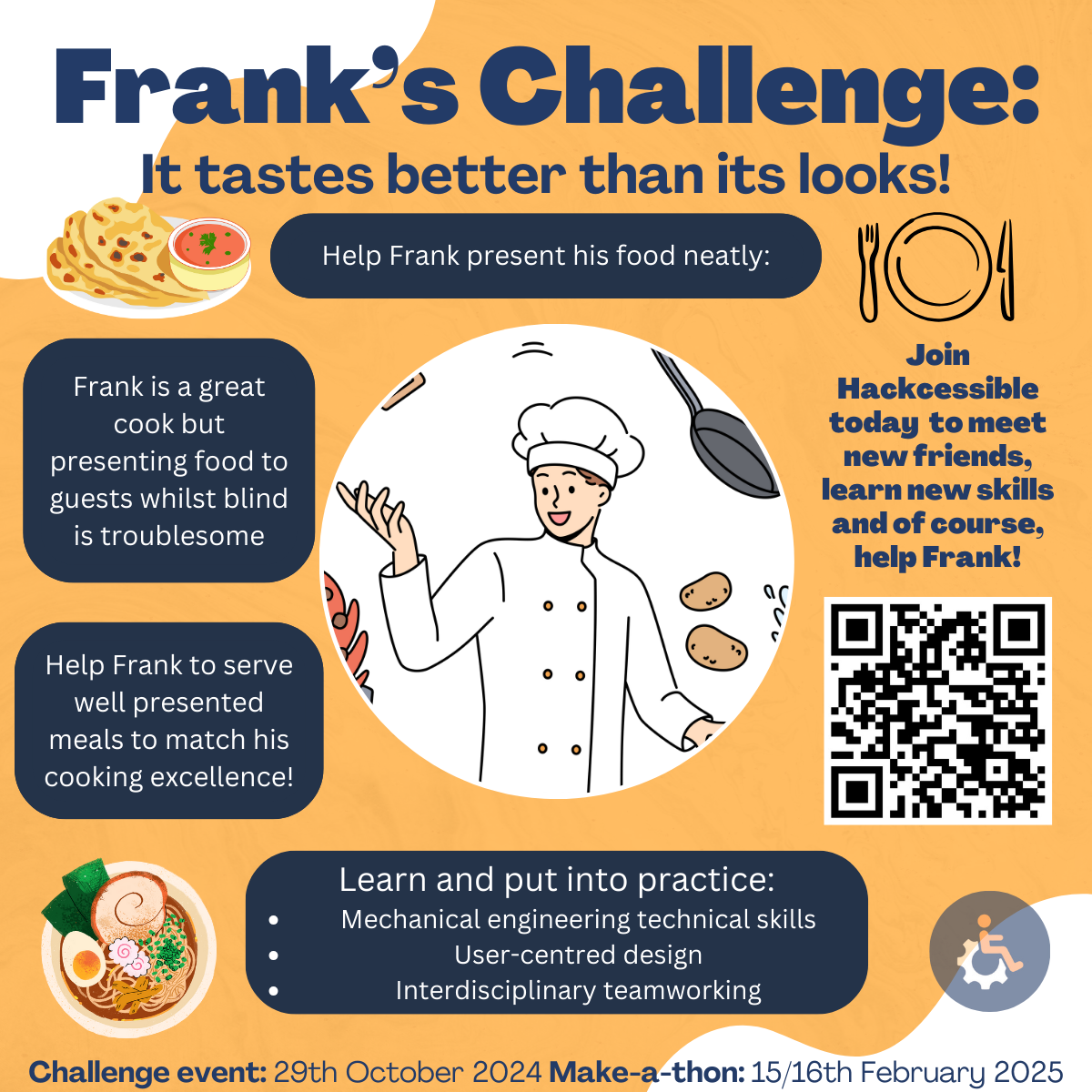
Frank’s Challenge
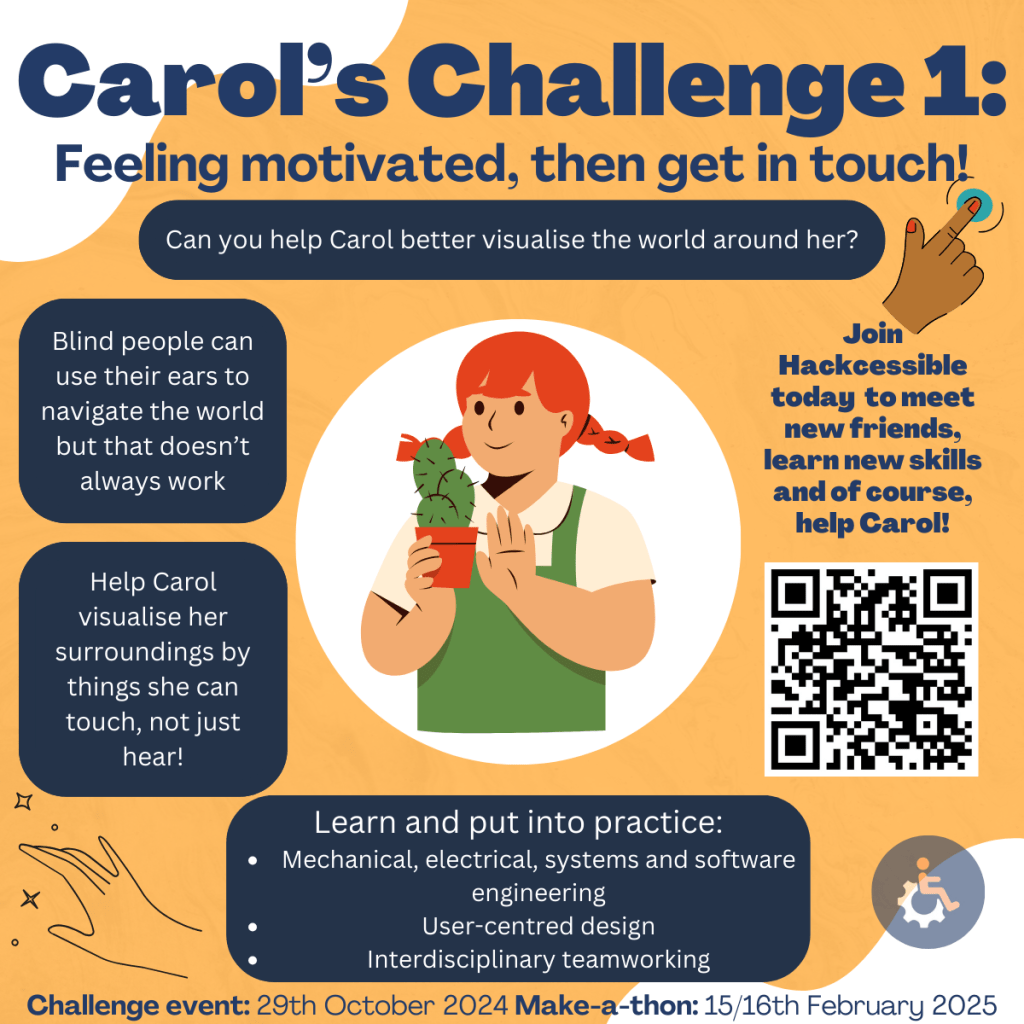
Carol’s First Challenge
Many adaptations for the visually
impaired use only auditory
feedback. This can be incredibly
useful but doesn’t always work.
For example, imagine you don’t
know what a capybara looks like
and you are trying to understand
what is on an image. If an auditory
prompt says “the image shows a
picture of a capybara” you would
still have no idea what a capybara
even is!
What shape is it? What texture is it?
Your task is to help Carol ‘see’ an
image or drawing, without doing
any seeing at all!
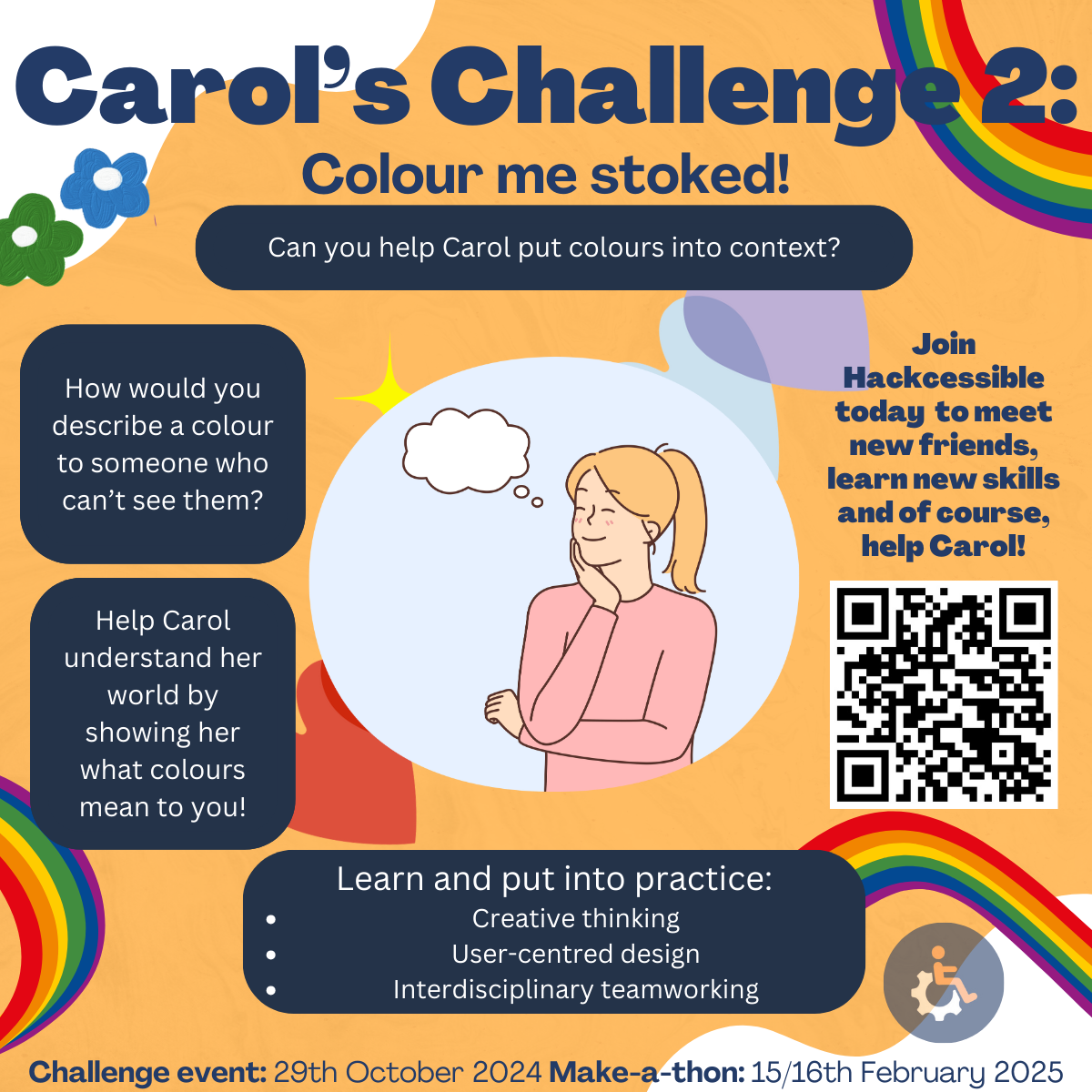
Carol’s Second Challenge
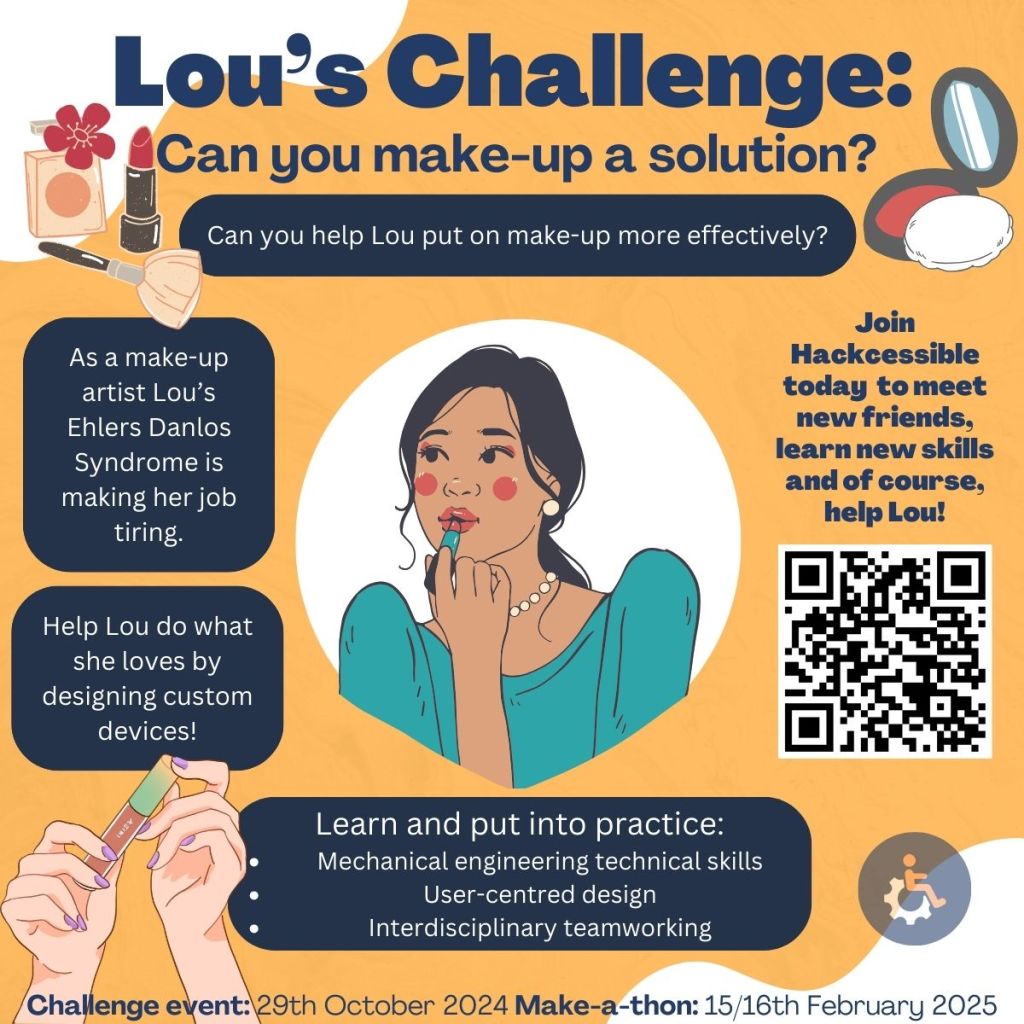
Lou’s Challenge
Lou is a fantastic make-up artist
who loves her job. Doing make-up
for herself and others is a
wonderful creative outlet and
improves her mental health!
Sadly, make-up products often
aren’t accessible for her as she
has Ehlers Danlos Syndrome.
This causes:
joint pain
shaky hands
sudden uncontrollable motions
This occurs mostly when fatigued,
which happens due to inaccessible
products and packaging.
Your task is to design a device that
helps Lou do make-up with less
pain and fatigue!
Mel works in a special education
primary school (ages 3-11) and
wants a way for the children to
have access to/be able to use
technology that isn’t distracting or
too expensive for their parents.
Your task is to design a device that
suits the children’s needs whilst
being cost effective for their
parents!
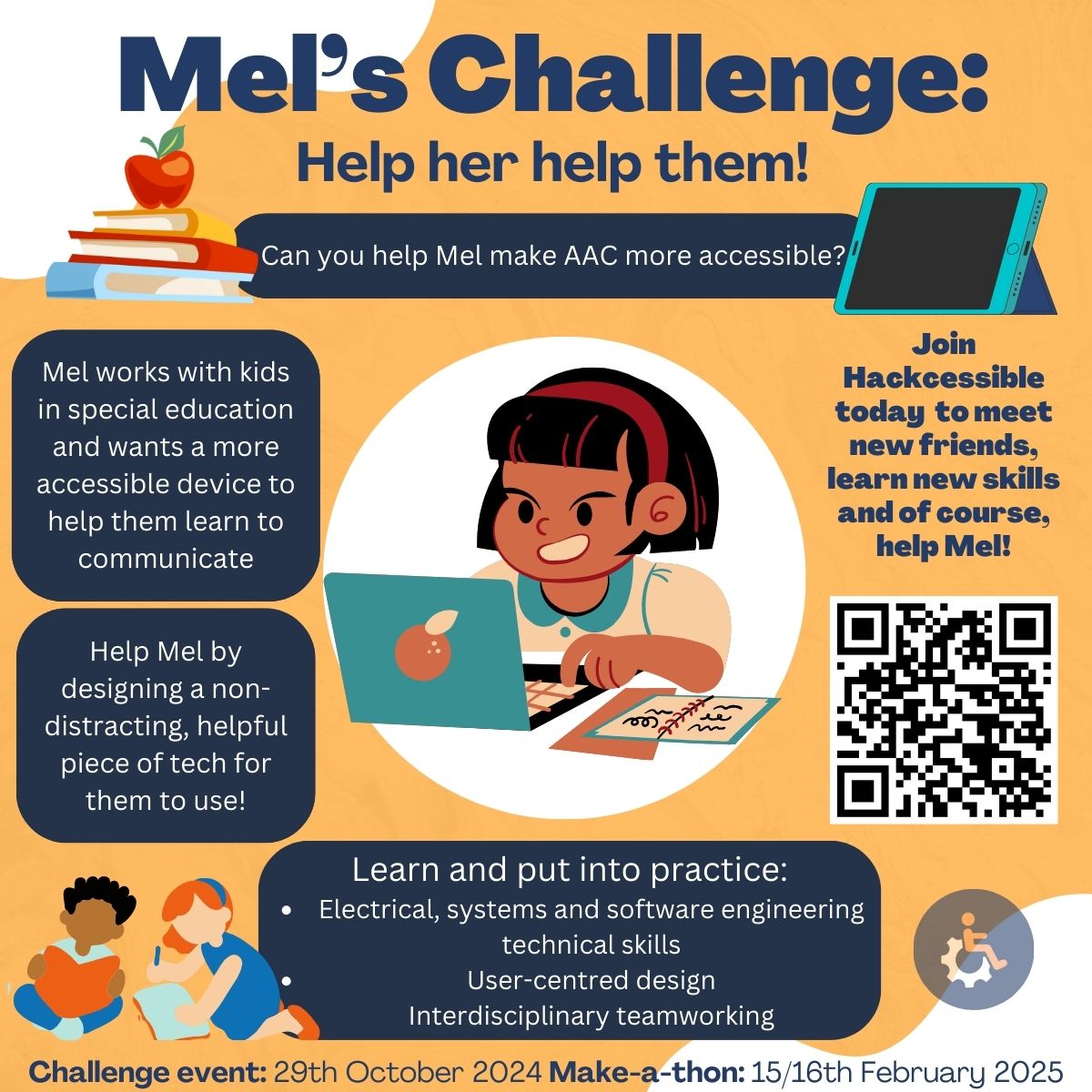
Mel’s Challenge
 Hackcessible